Tuesday, 14 April 2020

Cats and Human Pregnancy


Some parents mistakenly believe they should give up their cat when expecting a baby. In a survey carried out by Cats Protection in April 2018, 54% of expectant parents have concerns about having a child when they owned a cat.  But owning a cat when you are pregnant can have a positive impact your mental health, your cat can be a calming companion during your pregnancy but cats need help adjusting to the change of routine when a baby arrives.
Please see some tips to help you through your pregnancy and after your baby arrives. Anyone worried about owning a cat can call the charity’s national helpline on; 0300 12 12 12 for advice.
 
 From three months pregnant:
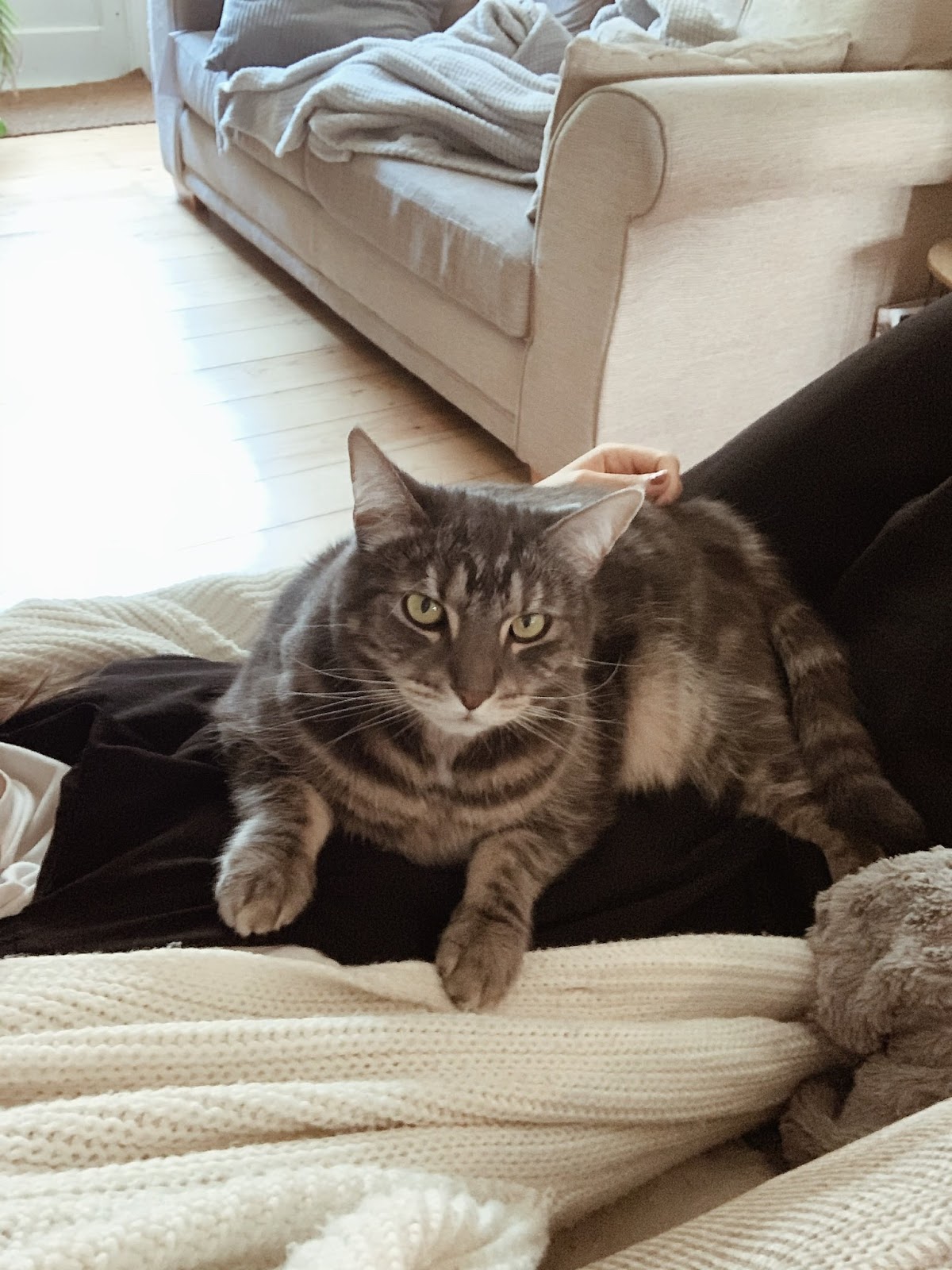
 
 
·      Get someone else in the home to change the litter tray, if this isn’t possible wear disposable gloves and apron when changing the litter tray. Cat litter and cat poo can contain a parasite that causes toxoplasmosis, studies have shown that cat owners are statistically no more likely to get toxoplasmosis than non- cat owners. The chance of catching the disease from your cat is very slim in fact you are more likely to get it from handling raw meat and good hand washing should be practised for more information please visit (www.cat.org.uk/toxo).
 
·      Start playing baby sounds.
·      The room that you will make the nursery keep off limits to the cat,   (if you need to, move resources out of the room do this slowly not straight away).
 
·      Take your cat to the vets for an up to date vet check to make sure your cat is healthy and there are no underlying health problems that need treating, get flea  and worm treatments up to date and if needed get your cat neutered and microchipped.
 
At six months pregnant

 
·      Introduce your cat to the new baby equipment (eg the pram and nursery furniture). Do not let your cat climb on it and keep the equipment off limits.
·      Reduce the amount of lap time you have with your cat by doing this your cat will start getting used to having less time with you.
·      Encourage your cat to use interactive toys and feeders so they can learn to entertain themselves.
 
Just before baby arrives
·      Plug in a pheromone diffuser (eg Feliway www.feliway.com) this will help to manage your cat’s stress levels and reduce the risk of unwanted behaviours.
·      Brush up upon your knowledge of your cats body language so you can recognise signs of stress when baby arrives. For more information please visit www.cats.org.uk/behaviour.
 
 
After the baby arrives


·      Make sure the cat has lots of hiding places to escape if they feel stressed.
·      Introduce your cat to your baby gradually. Don’t force interaction or leave your baby and cat alone together.
·      Finally make time to give your cat daily attention, this will help them relax and relax you.

Useful links


Friday, 10 April 2020

Skin Cancer in Light Coloured Cats

With the sun starting to shine it is very important that light coloured cats are monitored closely as they can get skin cancer on their sensitive parts such as ears and nose.

Here is a post all about skin cancer in light-coloured cats, what the look out for and the best ways to prevent it:


Some skin cancers in cats are caused by exposure to the sun. White cats and cats with lighter coloured fur are more susceptible to sunburn than dark coloured cats and thirteen times more likely to develop skin cancer. This is because their skin is more vulnerable to UV-light due to the lack of melanin in the skin. The most common skin cancer caused by sun damage is called Squamous Cell Carcinoma (SCC), it is a very aggressive cancer that can be fatal but can also be treated effectively if diagnosed quickly.

 
Symptoms and diagnosis
SCC is most commonly found on the tips of the ears, the nose and the eyelids, this is due to the lack of fur protecting the areas. Initially the cancer looks like small black scabs on the skin, it can easily be overlooked by owners for a small scratch. Other indications to look for are red sore ulcerated areas that continue to bleed with no signs of healing. A vet will need to take a biopsy in order to diagnose SCC.

 
SCC on Nose (img via)


SCC on eyelid (img via)


SCC on ears (img via)


Treatment


Depending on the location of the cancer and how advanced it is, the cancer can be removed surgically. For example, a pinnectomy (removal of the ears) is a very effective way to treat SCC on the effected ear tips. Other options such as cryosurgery (freezing cancer cells), radiotherapy and photodynamic therapy can also be affective.
Prevention

The best way to prevent SCC is by avoiding prolonged exposure to direct sunlight, especially during the summer months. However, this can be difficult as cats love to bathe in the sun and owners can’t always be around to keep an eye on them. There are special feline sunblock’s that can be purchased from a vet that the owner can apply directly to the susceptible areas. It is recommended to get a high SPF (30+) and apply frequently as cats are prone to groom themselves regularly, washing away the protection.

Fruity’s Story

Fruity came into Cats Protection when his owner became too ill to care for him. Because of this, Fruity spent most of his time outdoors where he enjoyed bathing in the raise of the sun. Unfortunately, his white tipped ears became victim to the damaging affects of the UV-light and therefore had to undergo surgery to remove the majority of his ears, preventing the possible spread of the cancer.
 
 
Fruity at the centre after ear removal
 

After his recovery Fruity went up for adoption and it wasn’t long before he found his forever home with his loving new family where he spent his retirement.
 
 
Fruity (changed the Lenny) at home
 
 
If you are concerned at all regarding any new marks of lumps on your cat then please call your local vet immediately.

Monday, 6 April 2020

Cats and Allotment - tips and tricks.

Our wonderful receptionist and resident green thumb Donna has written this blog full of tips and tricks for allotment owners and keen gardeners on how to deal with cat visitors:


Spring is in the air, allotment holders are weeding, digging and preparing seed beds – it takes a long time!

Digging over area in winter, adding manure, forking over in spring then rake, rake and rake again.  You may have prepared the perfect conditions for growing – for a cat you have actually created the best litter tray a cat could ask for! A nice clear safe area (so potential predators can be spotted), light substrate easy to cover and far away from a potential water or food source.

I love cats – I work for Cats Protection as a receptionist, one of the great joys of my job is seeing a cat leave for their forever home. I greet every neighbourhood cat with a cheery ‘good morning’ as it strolls through my little patch (I know they deter pesky rats, mice, rabbits, birds and voles from eating my newly emerged veg).

Creating gigantic litter trays not a joy! So I got my thinking cap on and over the last few years have managed to deter cats off my seed beds, without causing cats stress.
Cats prefer a nice large area – I put little stakes in across the seed bed and wind a temporary criss-cross pattern over the bed.


On small areas I place shallow dishes of water. When shoots emerge there may still be room for a cat to do what cats do, so I place rubber snakes on edges of beds- snakes represent a possible predator and so cats will avoid if possible.


I also place a metal cat on no go areas, it looks real enough at a quick glance to deter cats (cats are very territorial will avoid other cats if possible).


I am also lucky that there is an area on my allotment that won’t grow a thing so it’s been raked and cleared and I just get the rubber gloves on and clean up!

So basically thinking like a cat can actually help deter them from areas that are no-go. It does take a little extra work and planning to keep your allotment from becoming the best cat rest room in the locality. The methods I use can also be easily adapted to use in gardens, however green fingers crossed - soon there will be no room for a cat to cause any bother!


I try and be a mindful gardener when it comes to all wildlife, and cats, how far you take it is a personal preference. In particular, rat poison and slug pellets can be a potential hazard to all domestic animals and wildlife so I don’t use them.

I will finish by saying please at the end of your gardening day, before you shut the door for the night check your cosy shed with its hiding places and high shelves, at this time of year it might provide a safe haven for pregnant queens about to give birth, or curious young cats out on their first adventure.

Happy gardening folks!

Wednesday, 1 April 2020

Fearful Cats: How to Minimise Stress.


For many cats that come into Cats Protection’s care it can be quite an unnerving experience. The majority of cats relinquished come from previous homes, for a wide variety of reasons, but we also take in stray cats, cats that have had minimum human interactions, pregnant cats and new mothers and their kittens. All of which find being in a centre environment stressful in different ways.

Cats are inherently solitary animals (unlike other domesticated pets). Being in an unfamiliar setting; with the scent, sound and sight of other cats and contact with unfamiliar faces can be highly stressful and frightening to some. Add to this that they cannot roam freely outside and ‘escape’ from their surroundings. Unlike humans, cats live in the moment and have no concept of the future. Whereas we know it will only be a matter of time before they leave us to go to their forever homes, for them being in a pen environment is indefinite. 

It is important to take into consideration that some cats will likely feel scared and unsettled in a new home once adopted, for the first few weeks. It is important for us to understand the common signs a cat will exhibit that is experiencing fear and anxiety.

·         Hissing/ Growling

·         Excessive grooming

·         Dilated pupils

·         Staring fixed gaze, reduced blinking, avoidance of eye contact all together

·         Ears turned out to the side, or ears flat

·         Hiding

·         Tail flicking

·         Tense body with an arched back. Fur raised.

·         Walking with a hunched posture, tail and head down

Before
 
It is very important that when a cat is exhibiting any of these behaviours, not to ‘flood’ the cat. Flooding means to expose an animal to a fear eliciting stimuli without the opportunity to escape. Cats like humans can have a flight, fight and freeze reaction when scared.
Ways we can make a fearful cat feel more relaxed and secure:-

1.      All cats need a hiding place. In CP we use a feline fort. At home this could be a box, or an igloo bed.
2.      Cats need the opportunity to get off the ground and get up high. In CP we use a feline fort. You could try cat trees or shelving for your cat.
3.      It is important a cat builds up its own scent, so using two blankets so one can be washed when needed.  A pheromone spray called Feliway. (You can purchase this from CP centres, or online).
4.      Most importantly only approach a fearful cat when necessary to begin with. Think less is more, and aim to limit noise as much as possible. Cats often slow blink as a sign of being relaxed, so you can try to mimic this behaviour.
One of our cat carers recently engaged in what we refer to as ‘Desensitisation’ with two fearful cats at the centre; Teddy and Mickey. Both cats came from separate homes, but lived similar lives prior to arriving. Both cats had been kept indoors and were only pets. Initially, both cats would hide and give warnings upon entering the pen such as growling and hissing. It is important to first let them see you and smell you without you attempting to touch them.

During
 
She did this numerous times, and often placed new toys and food in to associate my presence with a positive experience. Slowly, they both gained confidence and came out to greet her and let her stroke them. They both made huge improvements and now enjoy interaction with us.
 

After

Thursday, 30 January 2020

2019 - A Year of Purrfect Sucess


When talking about success in the adoption centre we normally talk about homing figures and 2019 has been an outstanding year for the centres with 1508 homed from Bridgend and 139 from the HiC, making a total of 1647 cats and kittens homed, our highest figures to date and across the Chartiy.
 
The average stay (including mums and kittens who have to spend a lot longer here) is 29 days with cats leaving the centre within 11 days from fit to home. This figure is especially remarkable as we have faced a continued cat supply issue through 2019 but cats transferred in from local branches particularly Swansea and Gwent have buoyed figures.  1751 cats and kittens were admitted into care during 2019


Homing isn’t the only work that we do, so I would like to mention some of the other successful highlights from 2019:

·         We celebrated our 25th Anniversary of being open to the public helping over 31000 cats to date.

·         We received 217 enquiries from our local branches for help with rehoming cats resulting in 299 cats and kittens being admitted into our care from these enquiries.

·         Our TNR volunteers have neutered and returned 101 cats and 44 feral kittens have been admitted into our care to be socialised and rehomed.

·         Our fundraising volunteers have attended 9 events in the community, raising £1500 for the kitty and raising awareness of the centre and the work we do.

·         We held our second Pen y Fan sponsored walk raising around £1800.

·         Our Pawsome Open Day and 25the anniversary event  were extremely successful raising over £5100

·         We had a phenomenal £6000 + worth of food donated in our food bins in the local supermarket, much of this has been shared between local branches.


·         Over £1100 worth of cat goodie was purchased by supporters from our Amazon wish list

·         We held six just giving appeals, which have collectively raised over £1800. To date we have had 27 Just giving appeals which have raised over £17622!

·         We have increased our social media presence with over 4100 new likes, and followers on Bridgend, Cardiff FB, twitter and Instagram pages.  Notably Bridgend Centre FB now has over 20000 likes and Instagram over 1400.

·         Our blogs have been read by over 2000 people taking total since page start to over 51000 views

·         Artful Arlo adopted from the centre has become an Instagram celebrity with over 11,000 followers


·         We received over £29,480 in Pet plan commission in 2019 with 18.3% of adopters taking out full cover post adoption during the year.


I think you will agree with us that our achievements in 2019 have been exceptional and this is all down to all our staff and volunteers hard work, dedication, great teamwork and everyone going the extra mile.
Well done all and a BIG THANK YOU to all our supporters for your continued support  - here's to 2020!


Friday, 27 September 2019

Kitten Socialisation and Grooming Tips

One of our wonderful kitten fosterers, Eliza, has written our latest blog for us with some useful socialisation and grooming tips for a Queen and her growing litter of kittens:


I started volunteering with Bridgend Cat Protection 2 years ago and having gained experienced from the role of Cat Carer to which I became a kitten fosterer. With each litter, I have gained more and more experience.

Whilst each litter and mum are different, they all need the basic wellbeing needs such as grooming and human contact.

When mum and kittens first come into foster care mum is always quite nervous to leave her kittens, but she slowly gains confidence and is happy for me to interact with her and her kittens. It is important for kittens to be socialised at a young age to ensure that they have a positive experience with human contact. The first step is to slowly get them comfortable with being handled as I try to encourage the kittens to enjoy the grooming experience. One tip I have is to use a soft toothbrush, which encourages self-grooming and relaxation.
 
 
As the weeks pass by the kittens will tend to become more independent and will slowly know how to groom themselves. Mum cat will become less attached to the kittens and their needs.
Once the kittens reach the age of 5-7 weeks, I introduce a soft slicker brush which I find great for short and long fur. This is the type of brush that should be used for adult cats which is why it should be used at a young age so it will make the experience more rewarding when they are older.
 
 
Whilst it is important for the kittens to be groomed and kept healthy it is also important for mum cat to get lots of attention, grooming and human contact. She needs to know that she is just as special.
 

Being a volunteer and fosterer is such a rewarding experience knowing that I have done my best to care for both mum and kittens and prepare them for their forever homes."
 
If you would like more information about becoming a kitten fosterer then please email the centre on bridgend@cats.org.uk or call us on 01656724396.
 

Thursday, 15 August 2019

Celebrating 25 years of cat work!


Our adoption centre has helped over 33,000 cats since we opened our doors to the public 25 years ago!  It's an astounding figure and one which we are very proud of.  We have also helped thousands more cats through their neutering and education work.

Donatella gave birth to 13 kittens in our care!

“It’s amazing to think we’ve helped that many cats over the years – you just get on with the job each day, doing the best you can for the cats in your care,” said deputy manager Molly Hughes. “Before you know it, it’s a quarter of a century later and you realise you’ve helped more than 30,000 cats move to great new forever homes!”  Molly has worked at the centre ever since it opened, starting out as a cat carer and now working as deputy manager.

She said: “The way we work has changed a lot since 1994 – when we first opened there were no computers, no reception, just a phone and a notebook!  “We now have 24 members of staff and more than 70 volunteers helping us care for the cats, raise money, run reception and maintain the building.”

Sue Dobbs, Molly Hughes with CP staff and volunteers.

Everyone at the centre agrees that the best thing about their work is making a difference for cats and changing their lives for the better. 
These include seven kittens found dumped in a zipped-up handbag and left for dead outside the adoption centre in 2011. When the abandoned animals were spotted by a passer-by, they were only semi-conscious, suffering from a lack of oxygen and heat exhaustion. Luckily the kittens recovered from their ordeal and were soon found loving new homes.

The hand bag kittens were found semi-conscious in a zipped bag dumped outside the centre.

In 2013 six tiny kittens were found inside Parc Prison, Bridgend. Named Jessica, Sherlock, Christie, Marple, Kojak and Morse, the kittens – and their mum Agatha - got an early release when Cats Protection found them great new owners.  


The prison kittens had be bottle fed until their mum was captured and reunited with them.

The following year, stray cat Donatella won hearts and gave staff and volunteers a Christmas surprise when she gave birth to a huge litter of 11 kittens.
Sue Dobbs, centre manager, has been at the centre for 21 years and says it’s like being part of a big family.

Donatella' 11 kittens

She said: “It’s extremely varied and no two days are the same - it’s definitely never boring!
“We’re lucky to have a lot of support from the public. Lots of us have family and friends who say that – wherever they go in the world - they always meet someone who knows someone else who has adopted a cat from us. Unbelievable!”

Staff and volunteers often find themselves trying to help people as well as cats. “It can be frustrating if you’re trying to help someone but they don’t necessarily want to be helped,” said Sue.  “For example, some time ago we took in some cats from a lady in Cardiff because she had too many and it was all too much for her. But unbeknown to us, she’d hidden a cat upstairs in the house and the situation soon escalated again.  ” Despite incidents like these, most of the time the work is extremely rewarding and support for the centre is constantly growing – in recent years, this is largely thanks to the rise of digital media.

More than 19,000 people follow Cats Protection’s Bridgend Adoption Centre on Facebook, giving the team the chance to educate people across the UK - and around the world - about its work and messages about good cat welfare.  Sue said: “We have followers from more than 50 countries and people from outside the UK regularly donate to our fundraising appeals.

“Social media allows us to tell the story of what we do and helps a lot with fundraising. It’s our window to the world and a huge audience we didn’t have before. “It’s helping us to help even more cats – so here’s to the next 25 years!”

Cats Protection’s Bridgend Adoption Centre - which opened its doors in 1994 - is holding a special event to celebrate its 25th birthday on Saturday 7 September 2019.  Volunteers and staff will be getting into the party mood by dressing up in 90s fashion and are inviting visitors to do the same!

You’ll be able to view the cats looking for their forever homes and entertainer Loopy Lews will be performing magic shows and balloon modelling between 11am and 2.30pm.  There will also be stalls, a barbecue, refreshments, fresh cakes, bric-a-brac stalls, a bouncy castle, party games and face painting for visitors to enjoy.

Entry to the event will cost £1 for adults and 50p for children.

Hope you can join us on our special day!
Bye for now!